
First Children’s Book? 5 Mistakes You Can Easily Skip
Maybe your manuscript is half finished[cite: 1].
Maybe it's finished, but you've read it twenty times and now you're wondering if it's actually any good[cite: 1].
Maybe you've never spoken to an illustrator because you keep thinking, "I should finish everything first."[cite: 1]
If any of that sounds familiar, you're exactly who I wrote this for. Most first-time authors aren't looking for someone to draw pictures — they're trying to avoid making an expensive mistake before investing hundreds or even thousands of dollars into a story they care deeply about[cite: 1].
Over the last eight years, I've illustrated more than 75 published children's books and spoken with over 100 first-time authors. Many of them had never published anything before. One question comes up more than any other[cite: 1]:
"I don't really know what I'm doing. Is that okay?"[cite: 1]
Yes. It's more than okay — it's normal[cite: 1]. Here's what I wish every first-time author knew before they finished their first draft[cite: 1].
You don't need a finished manuscript to start thinking about illustrations
This is the biggest misconception I hear. Authors think the process goes: finish writing → then think about illustrations → then find an illustrator.[cite: 1]
In reality, many of the strongest projects begin while the manuscript is still evolving — not after it's declared finished[cite: 1].
Why? Because illustrations and text work together[cite: 1].
Sometimes moving just a few lines creates a much stronger page turn[cite: 1].
Sometimes one illustration replaces an entire paragraph because children understand the picture immediately[cite: 1].
Sometimes two scenes naturally belong together on a single spread[cite: 1].
Those are small decisions, but together they often make a book feel much stronger — and they're much easier to make before the manuscript is locked. Many authors I work with reach out with an unfinished draft specifically to get this kind of early clarity[cite: 1].
That said, "still writing" and "still editing" are different stages. Illustration planning works best once your story is reasonably settled — the sequence of events, the characters, the emotional arc. You don't need polished prose or a perfect final line on every page, but if the plot itself is still likely to change significantly, that's worth sorting out first. Otherwise we risk planning beautiful spreads around a scene that gets cut two drafts later. If you're not sure whether your manuscript is at that point yet, that's exactly the kind of thing I can tell you plainly when you send it over[cite: 1].
Either way, reaching out isn't too early. Even if the answer is "let's wait until the plot settles a bit more," you'll know that — instead of guessing[cite: 1].
"I don't know if my story is good enough" — every author thinks this
Nearly every first-time author I've worked with has questioned their own story at some point. Some wondered whether children would even understand it. Others thought it was too simple. A few almost gave up before sending me their manuscript. Then they published their book anyway[cite: 1].
The stories that become books aren't the ones written by authors who felt 100% certain. They're the ones written by authors who kept writing anyway. If you have a story that means something to you — a lesson you want a child to learn, a feeling you want them to have, a version of yourself or your family you want represented — that's enough to build on[cite: 1].
You don't need to know publishing terms
Trim size. KDP. ISBN. Bleed and margins. IngramSpark[cite: 1].
None of this needs to make sense to you right now. It didn't make sense to most of my clients either, on their first message. I've had authors send handwritten pages, Word documents full of comments, Google Docs, photos of notebook pages, and sometimes just a paragraph explaining the idea they couldn't stop thinking about. That's all perfectly fine. Part of guiding a first-time author through this process is translating all of it into plain language, at the point where it actually becomes relevant — not before[cite: 1].
If publishing terminology is stopping you from reaching out, let it go. That's not your job to figure out alone[cite: 1].
If you've experimented with AI images, here's what's worth knowing
Most people try AI because they're excited — not because they're trying to replace an illustrator. That makes sense. AI can be genuinely useful for exploring ideas early on[cite: 1].
But a published children's book asks much more from its artwork. Characters have to stay consistent from page 1 to page 32. A picture book isn't a collection of beautiful images — it's one continuous visual performance, where the same child has to look, feel, and behave like the same person from the first page to the last. Expressions have to feel believable. Every page has to connect emotionally with a child. That's where custom illustration makes the biggest difference[cite: 1].
There's another practical consideration. Current U.S. copyright guidance generally does not extend copyright protection to images generated solely by AI without sufficient human authorship. If your goal is to publish a book and own its artwork, that's an important factor to understand before making a decision[cite: 1].
If you've used AI to get a feel for your characters, that's a completely reasonable starting point for a conversation. Bring me what you have, and I'll show you what those same characters look like hand-drawn and built to carry real emotion across every page. You can compare those hand-drawn examples in my portfolio. Once authors see their own character redrawn by hand — with consistent features, believable expressions, and the same personality on every page — the difference usually speaks for itself. In fact, several authors I've worked with first shared AI-generated concepts. We used those only as visual references, then created completely original hand-drawn artwork for the published book[cite: 1].
Your page count and word count usually develop together
One of the first things I look at isn't just the story — it's who you're writing it for. A board book for toddlers is built very differently from a picture book for six-year-olds or an early chapter book for independent readers. The age group influences the ideal word count, page count, pacing, and even how much of the story is told through illustrations[cite: 1].
Here are the ranges I generally recommend when reviewing first-time manuscripts[cite: 1]:
| Age | Reader | Book Type | Typical Words | Typical Pages |
|---|---|---|---|---|
| 0–3 | Read aloud | Board Book | 0–150 | 12–24 |
| 2–5 | Read aloud | Picture Book | 200–500 | 24–32 |
| 4–8 | Read together | Picture Book | 400–800 | 32–40 |
| 5–7 | Beginning Reader | Early Reader | 500–1,500 | 32–64 |
| 6–9 | Independent Reader | Early Chapter Book | 1,500–6,000 | 48–96 |
These are guidelines, not rules. Great children's books exist outside every one of these ranges. But if your manuscript is much longer or shorter than what's typical for your audience, it's worth talking about before illustrations begin[cite: 1].
That's why I don't recommend choosing a page count first. We start by understanding your reader, then build the book around them. Page count is often the result of the story — not the starting point[cite: 1].
One practical consideration worth knowing: Amazon KDP's official print specifications currently require paperbacks to have a minimum of 24 pages. If you're planning to publish through KDP, it's worth keeping this in mind while planning your book. That doesn't mean every children's book should be 24 pages — it simply means your publishing platform can influence the final structure. Board books are often printed through specialty manufacturers rather than KDP, so they commonly run 12, 16, or 20 pages instead. We'll look at your story first, then decide on a page count that works for both the story and the platform you're publishing through[cite: 1].
Official source: Amazon KDP Print Specifications
Don't let an unanswered logistics question keep you from starting the conversation[cite: 1].
What "still writing" authors usually need most
If I had to summarize the actual need behind most of these early messages, it's not really about illustrations yet. It's[cite: 1]:
- Am I on the right track?[cite: 1]
- Does what I have so far make sense as a children's book?[cite: 1]
- What am I missing?[cite: 1]
- Is this realistic for someone like me — a first-time author with no publishing background?[cite: 1]
These are reasonable questions. And they deserve real answers — not a sales pitch[cite: 1].
What actually happens when you send me your manuscript
I don't start by talking about price. Two books with the same page count can require completely different illustration work, so I always read the manuscript before putting together a quote[cite: 1].
When you send me your manuscript, here's what you'll receive:
- My honest first impression as a reader[cite: 1]
- The moments I think children will remember most[cite: 1]
- Any questions I'd ask before illustrating the story[cite: 1]
- Whether I think the manuscript is ready for illustrations — or whether another draft would strengthen it first[cite: 1]
- Suggestions for page count, age group, and illustration approach[cite: 1]
Here's a genuine excerpt from a personalised review I sent one author, with identifying details removed[cite: 1]:
"Thank you for trusting me with your story. Rather than sending you my portfolio, I wanted to spend some time reading it properly first. This page contains my first impressions, the questions I noted while reading, and how I believe we can bring your character to life together."[cite: 1]
What stood out while reading: "From the very beginning, your character describes his situation with real confidence. The illustrations should reflect that same feeling — showing a child who is curious, capable, and comfortable being himself. Many of the most meaningful moments in your story are quiet ones. These will need illustrations that communicate emotion without relying only on words."[cite: 1]
Questions I already had: "How old is your character? Knowing his age helps me draw him in a way that feels just right for the story. Is there anything about him you definitely don't want me to change — his hairstyle, his clothing, his favourite things?"[cite: 1]
"No need to answer these now — they simply help me understand your character better before creating the illustrations."[cite: 1]
Every author receives a page like this before I quote their project — not a generic estimate, but a real read of their specific story, with real questions and real observations. I usually spend a few hours reading and making notes before replying, which is why I don't send quotes immediately after someone contacts me. I don't send a price until I understand what your book actually needs[cite: 1].
My job isn't to convince you to start immediately. It's to help you know what the right next step is[cite: 1].
I still remember one author apologizing before she sent me her manuscript, because she thought it wasn't "good enough" yet. A few months later, she was holding her published book[cite: 1].
What to do next
If your manuscript is finished, send it[cite: 1].
If it's only half finished, send that[cite: 1].
If all you have is a rough outline and a character you've fallen in love with, that's enough too[cite: 1].
I'll tell you plainly where I think your project stands, what I'd work on next, and whether it's the right time to start thinking about illustrations. Sometimes the answer is "you're ready." Sometimes it's "give the story one more draft." Either way, you'll leave the conversation knowing your next step instead of wondering what to do next[cite: 1].
Every project starts with a manuscript review
No obligation. No generic quote. Just a real assessment of your story. If your manuscript is further along, this same review also covers book formatting and KDP publishing — so you know the full path from story to Amazon, not just the illustration piece[cite: 1].
Every published children's book was once an unfinished draft that someone wondered was good enough[cite: 1].
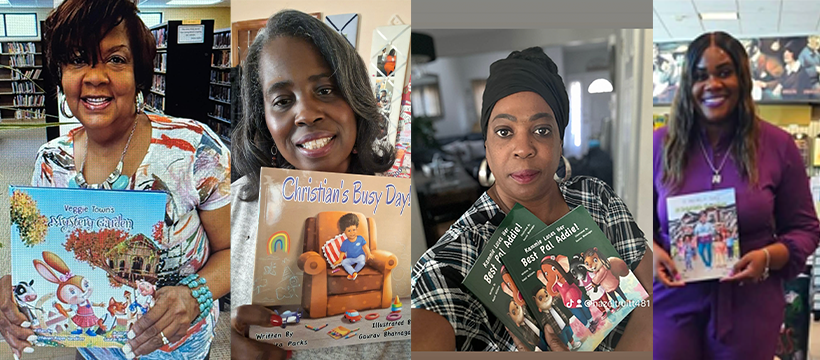
The only difference is that one day, its author decided to share it. You can see where that path leads on the published books page — real books, real authors, all searchable on Amazon[cite: 1].
If you'd like a second set of eyes on your manuscript before investing in illustrations, send me your manuscript — even if it's only a first draft[cite: 1].
Frequently Asked Questions
How much does it cost to illustrate a children's book? +
Can I hire an illustrator for an unfinished children's book? +
How many words should a picture book have? +
What's the minimum page count for Amazon KDP? +
Can I use AI-generated images in a published children's book? +
How long does it take to illustrate a children's book? +
Should I finish writing before hiring an illustrator? +
Is my manuscript confidential? +
How many illustrations does a children's book usually need? +
Do I need to copyright my manuscript before sending it? +
Ready to send your manuscript?
I'll personally review your story and reply within a few days with my honest impressions, questions, and next steps — free, no obligation[cite: 1].
Three quick answers and Gaurav will reply with a personalised plan within 24 hours[cite: 1].
No spam · No pressure · Gaurav replies personally